
What Is the Cervical Spine?
Cervical Spine is the upper section of the spinal column located in the neck. It supports the head, protects the upper spinal cord, and allows controlled neck movement. This region includes vertebrae, discs, joints, nerves, muscles, and connective tissues that work together during posture, rotation, bending, and everyday activity.
Quick Facts About Cervical Spine
Category
Anatomical spinal region
Used for
Assessing neck structure and movement
Common confusion
Confused with the entire spinal column
Also called
Neck Spine, C-spine
Often discussed with
Neck Pain Treatment
Key Takeaways About Cervical Spine
- The cervical spine forms the neck portion of the spinal column.
- Neck motion depends on coordinated joints, discs, nerves, and muscles.
- The cervical spine is not the same as the entire spine.
How Cervical Spine Works
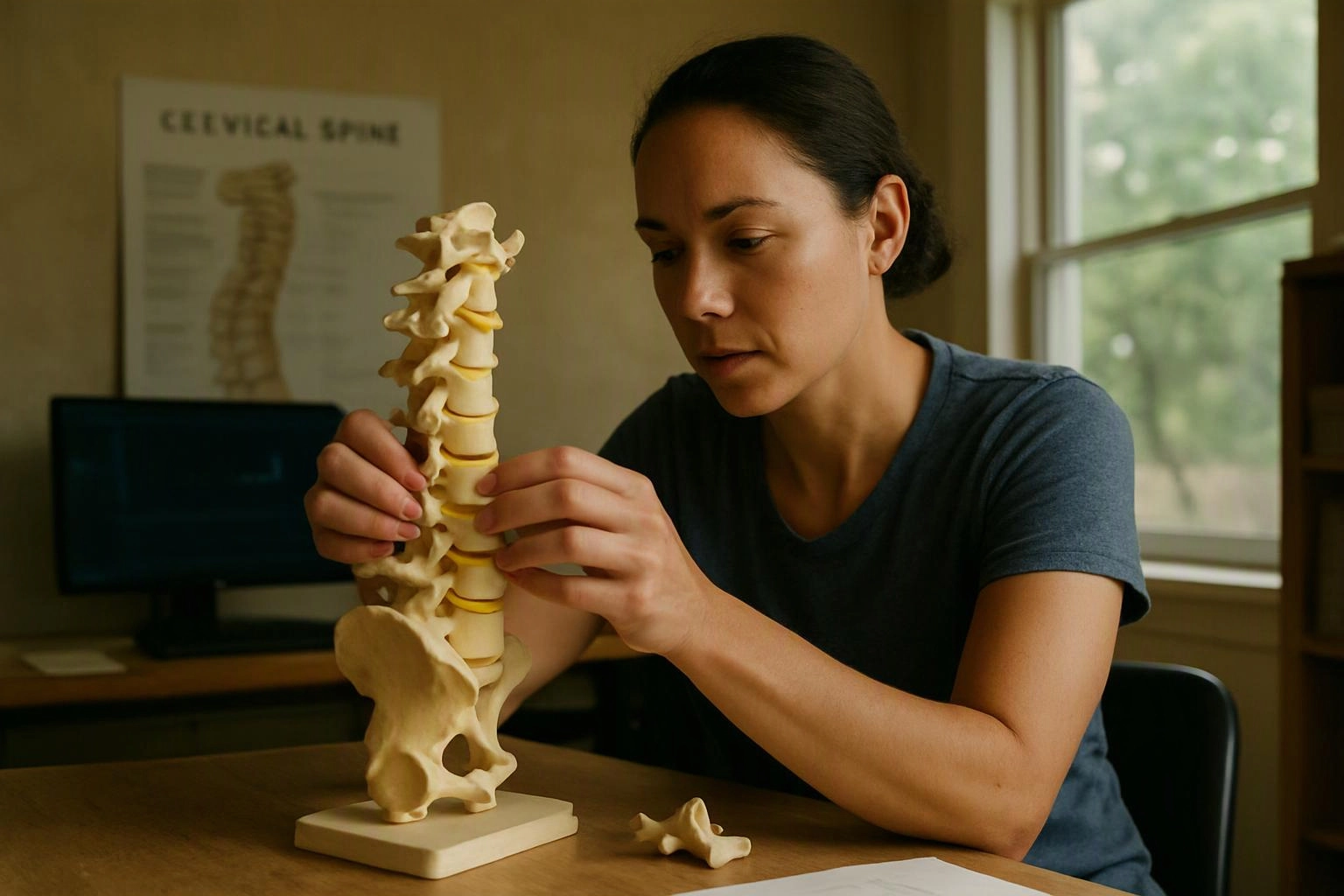
Cervical spine function depends on coordinated movement between vertebrae, discs, joints, and soft tissues. The vertebrae provide structure, while discs help distribute pressure during motion. Facet joints guide movement, and nearby muscles help control head position during sitting, walking, and turning.
Related glossary terms: Atlas Vertebra, Cervicogenic Headache, Facet Joint.
Clinicians assess this region through posture, active range of motion, muscle function, and reported symptoms. The nerve roots that leave the neck can affect sensation and muscle control in the arm. The thoracic spine connects below the neck and influences how the upper body positions itself during movement. These relationships help place neck discomfort in an anatomical context.
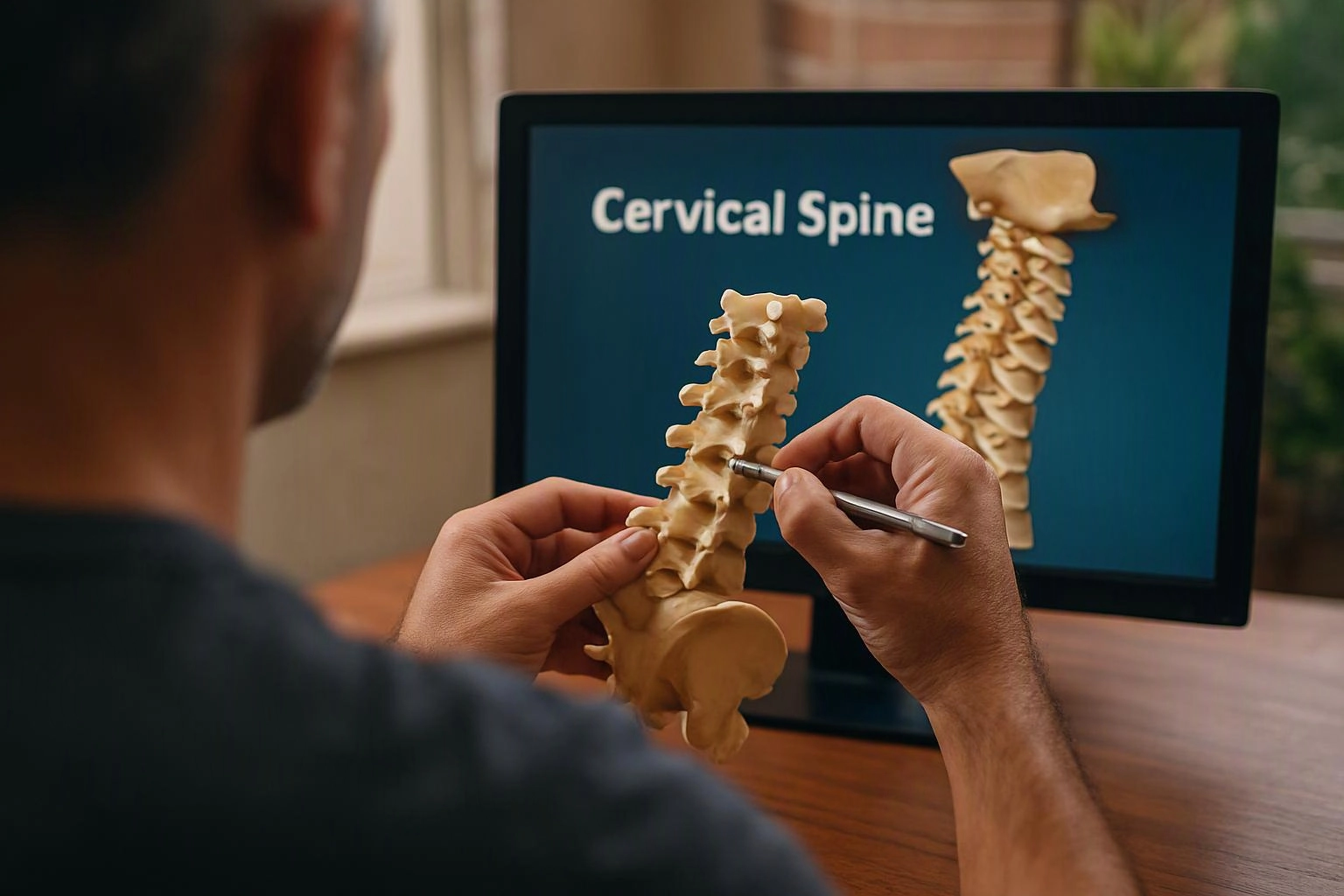
From the Arrowhead Clinic Chiropractor Savannah team
When we assess the cervical spine during Neck Pain Treatment, we consider posture, available neck movement, muscle response, and symptom patterns together. We also check how the neck relates to the shoulders and upper back, since nearby structures can influence movement and comfort.
Cervical Spine in Practice: A Real-World Example
A person with neck pain after prolonged computer use may show limited rotation and increased muscle tension around the cervical spine. A clinical assessment can examine neck movement and related shoulder and upper-back function.
Related Services
Related Terms
Atlas Vertebra
Atlas Vertebra is the first cervical vertebra in the neck and the uppermost bone of the…
Cervicogenic Headache
Cervicogenic Headache is a headache caused by referred pain from structures in the neck, such as…
Facet Joint
A facet joint is a small paired joint at the back of the spine that connects…
Forward Head Posture
Forward Head Posture is a postural alignment pattern in which the head rests ahead of the…
Arrowhead Clinic Chiropractor Savannah
Have Questions About Cervical Spine?
Contact Arrowhead Clinic Chiropractor Savannah for practical guidance on Cervical Spine and related chiropractor work in Savannah.