
What Is Kinesiology Tape?
Kinesiology Tape is an elastic adhesive strip applied to skin to support movement and provide light sensory input during activity. The tape stretches with the body and may help guide awareness of a joint or muscle area. It does not immobilize a body part like rigid athletic tape or a brace.
Quick Facts About Kinesiology Tape
Category
Elastic therapeutic tape
Used for
Movement support during activity
Common confusion
Not the same as rigid athletic tape
Also called
Kinesio Tape, Elastic therapeutic tape
Often discussed with
Sports Injury Treatment
Key Takeaways About Kinesiology Tape
- Elastic material moves with the body.
- Application depends on the area and activity.
- Kinesiology Tape is not a rigid brace.
How Kinesiology Tape Works

Kinesiology Tape stretches as the skin and nearby tissues move. Its adhesive surface keeps the strip in place while the flexible material follows ordinary motion. This combination gives the wearer tactile feedback around a selected area without fully restricting movement.
Related glossary terms: Joint Mobilization, Range Of Motion, Neuromuscular Reeducation.
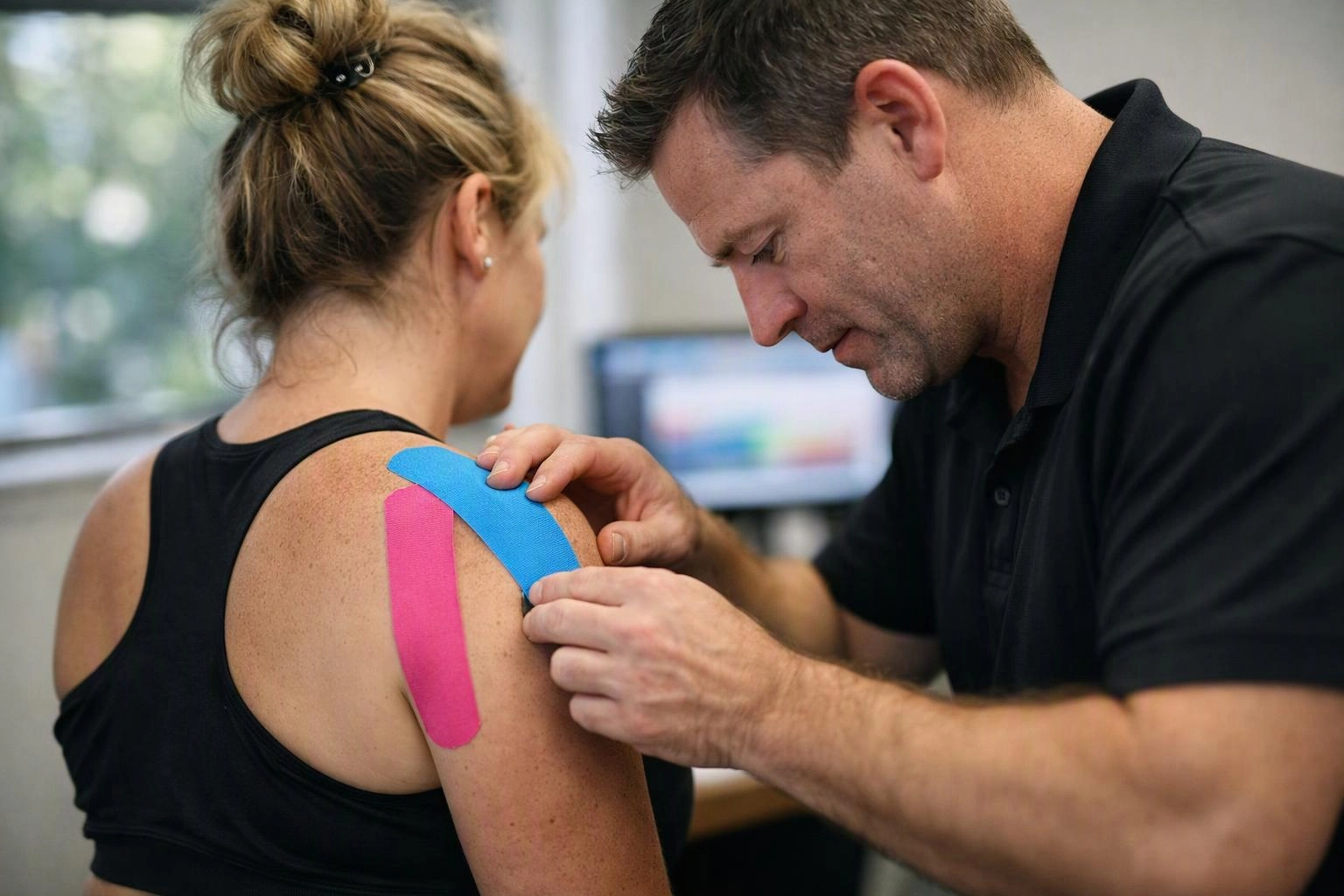
Application depends on the body region, the activity, and the purpose of the support. A practitioner may place strips along a muscle area or across a joint to help the athlete stay aware of positioning during practice or recovery. Rigid athletic tape serves a different purpose because it limits motion more firmly. Tape should complement an assessment and movement plan, not replace either one. Sports Injury Treatment may include tape as one part of a broader care approach.
From the Arrowhead Clinic Chiropractor Savannah team
When we use Kinesiology Tape during Sports Injury Treatment, we first consider the activity, the body area, and the athlete’s movement pattern. We check the skin and the tape’s placement during motion, then adjust the application when the strip interferes with comfort or movement. We treat tape as one supportive tool within the care plan.
Kinesiology Tape in Practice: A Real-World Example
A recreational runner with mild ankle soreness may receive Kinesiology Tape along the ankle area before a guided movement session. The tape can provide sensory feedback while the runner practices controlled motion, but it does not replace evaluation of the underlying issue.
Related Services
Related Terms
Joint Mobilization
Joint Mobilization is a hands-on technique that applies controlled movement to a joint to improve motion…
Range Of Motion
Range of motion is the available movement at a joint or body region. The term describes…
Neuromuscular Reeducation
Neuromuscular Reeducation is a therapeutic process that helps the nervous system and muscles coordinate movement more…
Muscle Spasm
Muscle Spasm is a sudden, involuntary tightening of a muscle that may feel hard, painful, or…
Arrowhead Clinic Chiropractor Savannah
Have Questions About Kinesiology Tape?
Contact Arrowhead Clinic Chiropractor Savannah for practical guidance on Kinesiology Tape and related chiropractor work in Savannah.