How to Compare Treatment Options for Back Pain
Back pain treatment options should be compared by the likely cause, symptom pattern, safety considerations, goals, and how progress will be checked; Arrowhead Clinic Chiropractor Savannah uses Free Consultations to help organize those decisions.
Request an EstimateOptions at a Glance
Each treatment approach serves a different purpose. We use the symptom pattern and clinical assessment to help match the discussion to your treatment goals.
What Should You Compare Before Choosing Back Pain Treatment?
Back pain treatment should be compared by whether the approach fits the suspected cause, current symptoms, safety needs, and personal goals.
We begin with symptom history, movement assessment, and clinical examination. We also ask what you want to improve, such as comfort, range of motion, work activity, sleep, or daily function.
A useful comparison considers the expected care focus, risk considerations, follow-up assessment, and signs that another type of medical evaluation may be needed. Our team can discuss Back Pain Treatment when conservative care fits the findings.
Which Signs and Symptoms Help Guide the Comparison?
Back pain symptoms help guide treatment choices because different patterns can point to different needs. We review how symptoms behave during rest, movement, work, and daily tasks.
What Common Causes Can Change the Best Treatment Approach?
Common causes can change the best treatment approach because back pain does not have one universal source. We connect the reported symptoms with examination findings before discussing a care plan.
How Do Chiropractic and Other Treatment Approaches Compare?
Chiropractic care may suit people seeking a conservative, movement-focused approach, while medical evaluation or other treatment may be more appropriate when symptoms require additional assessment or escalation.
We compare each option by its treatment goals, risk considerations, and method of progress monitoring. The right choice can also change as symptoms and function change.
| Option / System | Best For | Typical Follow-Up | Key Trade-Offs |
|---|---|---|---|
| Chiropractic care | Conservative care with movement and spinal health goals | Progress review based on symptoms, mobility, and function | Suitability depends on examination findings and safety screening |
| Exercise therapy | Strength, mobility, and movement confidence | Function and exercise tolerance | Requires consistent participation and suitable exercise selection |
| Physical therapy | Structured rehabilitation and activity goals | Movement quality, strength, and task performance | The plan must match the condition and activity demands |
| Medical evaluation | Diagnostic review, medication discussion, or escalation | Clinical findings and symptom response | May involve additional testing or medical referral |
| Surgery | Selected structural problems that require operative care | Recovery, function, and medical follow-up | Involves greater intervention and requires medical assessment |
How We Match Care to Different Back and Spine Conditions
Back pain treatment should match the condition being addressed, so our team connects the symptom pattern and examination findings with the most appropriate care discussion.
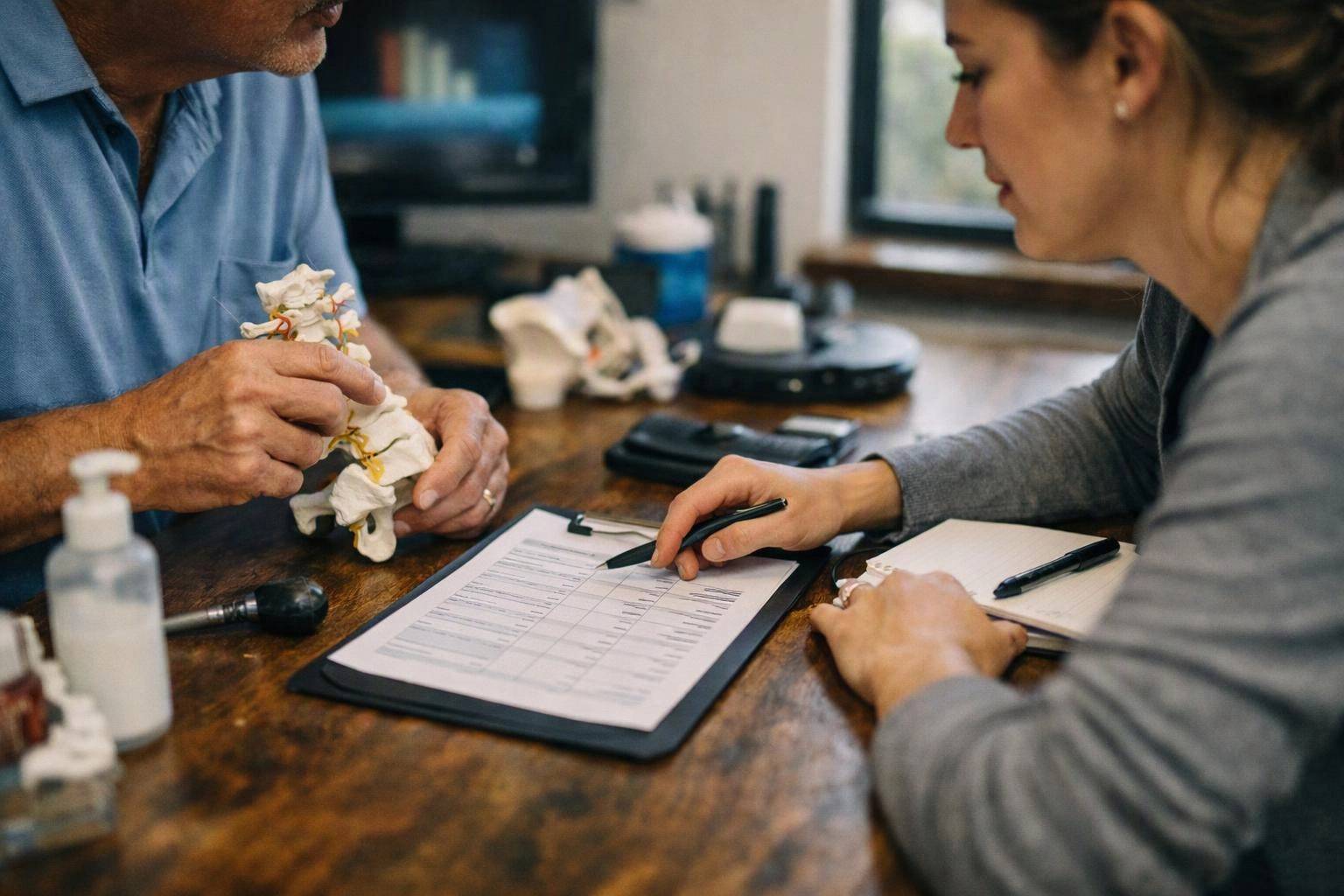
Our discussions may include neck pain treatment, sciatica treatment, headache treatment, herniated disc treatment, scoliosis treatment, or posture correction. We explain the purpose of each option and how progress evaluation may be handled.
Questions About Neck Pain Treatment Approaches
Neck pain treatment should consider the cervical spine, mobility, posture, and the way symptoms affect daily activity.
We review neck movement, muscle tension, work positions, and symptom behavior before discussing care. A plan may focus on conservative movement support when the clinical assessment and safety screening support it.
What to Discuss During a Sciatica Treatment Consultation
Sciatica treatment should address nerve irritation, leg pain, numbness, and movement tolerance.
We ask when symptoms began, what positions change them, and whether strength or function has changed. Those details help us decide whether conservative care is suitable or whether medical referral deserves discussion.
Questions About Headache Treatment and Chiropractic Care
Headache treatment may involve reviewing neck tension, cervical mobility, posture, and possible headache triggers.
We discuss symptom timing, movement patterns, work habits, and changes in headache behavior. New, severe, or unusual headache symptoms require appropriate medical evaluation.
Questions to Ask About Herniated Disc Treatment
Herniated disc treatment should be considered alongside disc irritation, radiating symptoms, spinal movement, and care suitability.
We review whether symptoms travel into an arm or leg and whether numbness, weakness, or movement limits are present. Our team uses those findings to discuss conservative care or the need for additional evaluation.
What to Discuss During a Scoliosis Treatment Consultation
Scoliosis treatment should account for spinal curvature, asymmetry, mobility, and individual goals.
We examine how posture and movement relate to comfort and function. Individualized care focuses on the findings that matter for the person being evaluated.
Questions to Ask About Posture Correction
Posture correction should address ergonomics, movement habits, muscle balance, and spinal alignment.
We look at sitting, standing, lifting, and screen-use habits. The discussion may include mobility exercises, strengthening, and practical changes that support better movement control.
What Questions Should You Ask During a Back Pain Consultation?
A useful consultation should clarify the suspected cause, the purpose of each recommended approach, how progress will be evaluated, and when another type of evaluation may be needed.
Bring a clear description of your symptoms and the activities that change them. We use that information to organize the clinical assessment and explain care alternatives.
How Do You Know Whether a Treatment Plan Is Working?
A back pain treatment plan is working when symptoms, movement, and daily function improve in a way that matches the agreed treatment goals.
We may review pain response, range of motion, strength, function, and symptom changes. A treatment reassessment helps determine whether the plan should continue, change, or include another type of evaluation.
What Can Help Prevent Back Pain From Returning?
Back pain prevention focuses on daily habits that support movement, strength, and spinal health. We help connect these habits to your activities and treatment goals.
When Should Back Pain Receive Additional Medical Evaluation?
Back pain needs additional medical evaluation when symptoms suggest a serious condition, neurological change, significant trauma, or a need for care beyond conservative treatment.
Progressive weakness, loss of sensation, bowel or bladder changes, severe symptoms, or pain after significant trauma require prompt medical attention. We use safety screening to identify when medical referral is the more appropriate next step.
How We Use a Free Consultation to Compare Your Options
Free Consultations at Arrowhead Clinic Chiropractor Savannah help us review symptoms, discuss patient goals, explain relevant care options, and identify the next appropriate step.
Our team discusses symptom history, examination findings, treatment expectations, and progress evaluation. We focus on a care planning conversation that keeps patient safety and personal goals at the center.
Use our contact page to ask about the next step.
Get a Free EstimateQuestions About Choosing Back Pain Treatment
Is chiropractic care appropriate for every type of back pain?
No, chiropractic care is not appropriate for every type of back pain. Arrowhead Clinic Chiropractor Savannah uses symptom review and safety screening to discuss whether conservative care fits the clinical findings or whether medical evaluation is needed.
What should I bring to a back pain treatment consultation?
Bring a clear symptom history, a list of activities that change your pain, and information about previous evaluations or care. Those details help us connect your goals with the clinical assessment.
How can I compare chiropractic care with physical therapy for back pain?
Compare chiropractic care and physical therapy by treatment goals, examination findings, exercise needs, movement tolerance, safety considerations, and how progress will be measured.
Can posture correction help with back pain?
Yes, posture correction can help when posture, ergonomics, and movement habits contribute to muscle tension or limited mobility. We connect posture advice with strengthening, mobility, and the person’s daily activities.
What symptoms suggest that back pain needs medical evaluation?
Progressive weakness, loss of sensation, bowel or bladder changes, severe symptoms, or significant trauma suggest that back pain needs medical evaluation.
Related Resources
Benefits of Spinal Decompression Therapy for Back and Leg Symptoms
When You Need ItSigns You May Need a Chiropractic Adjustment: Stiffness, Limited Motion, and Posture Changes
When You Need ItWhen to See a Chiropractor After a Car Accident: Delayed Whiplash Warning Signs
When You Need ItSciatica Warning Signs: When Leg Pain, Numbness, or Weakness May Need Chiropractic Care