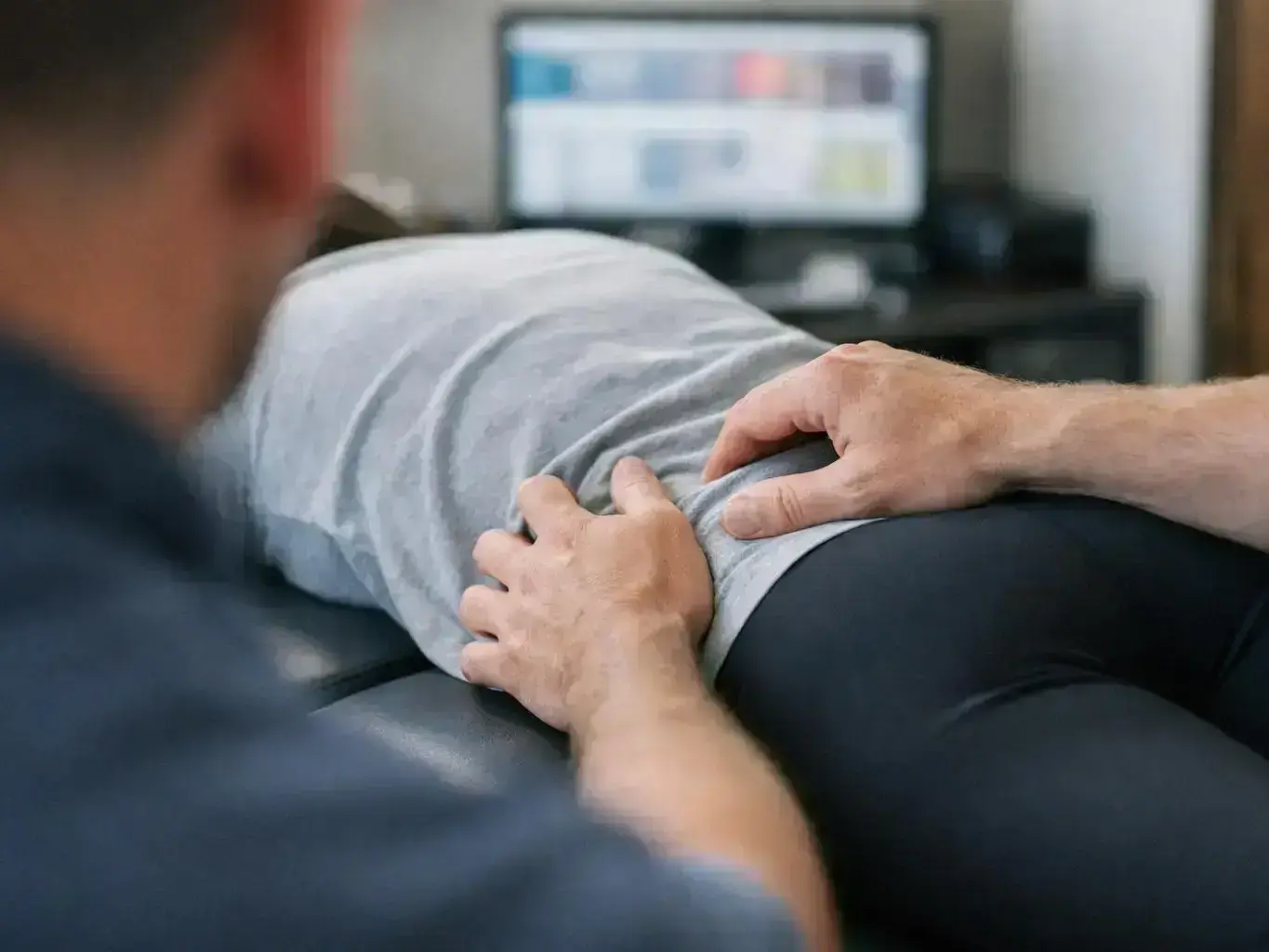
Adjustment is a controlled, manual force applied by a chiropractor to a specific joint in the spine or other body part to restore proper movement, reduce pain. And improve function. Adjustments are precise and often produce a popping sound caused by gas releasing from the joint.
Category
Chiropractic treatment
Used for
Pain relief, joint mobility, nerve function
Common confusion
Adjustments are not the same as cracking your own knuckles
Also called
Chiropractic adjustment, Spinal adjustment
Often discussed with
Chiropractic Consultation and Diagnosis, Car Accident Injury Rehabilitation

A chiropractic adjustment helps fix joint problems. It's also called spinal manipulation.
Related glossary terms: Chiropractic Adjustment, Chiropractic Manipulation, Joint Dysfunction.
Joints can get stiff or stuck. They may move the wrong way. This causes pain.
Adjustments help joints move better. They can lower pain and swelling. They also ease tight muscles.
This treatment is safe. A trained chiropractor must do it. It helps with back pain, neck pain. And headaches.
The chiropractor uses their hands. They may use a small tool. They give a quick, gentle push to the joint.
This push helps the joint move right again. It brings back normal movement. Many hear a popping sound.
The sound is just gas leaving the joint. It's not harmful. Nothing is breaking or cracking.
Most people feel better right away. Some need a few visits. That gives the best results.
Chiropractors check your spine and joints first. They look for stiff or sore spots.
They also check if joints are out of place. Then they find the problem. They push the joint with their hands.
They may use a special tool. The push is quick and controlled. It moves the joint back into place.
This helps the joint move better. The adjustment takes just a few seconds. They may fix one joint or more.
The way they do it depends on you. Some methods use gentle pressure. Others use a quick push.
It depends on your age and health. It also depends on the joint they treat. For kids, they use a lighter touch.
They do the same for people with osteoporosis. After the adjustment, they may give advice.
They might suggest exercises or stretches. They may ask you to change some habits. This helps keep joints moving right.
They may want you to come back. This keeps the joint in place. It stops pain from returning.
Adjustments are part of a bigger plan. This plan may include massage. It may have physical therapy too.
Adjustments help your body work better. They don't need surgery or medicine.
When joints move right, they stress less. This eases pain. It helps your body feel and move better.
A neck joint out of place can cause headaches. It may cause dizziness. A back problem can cause leg pain.
It can cause sciatica (pain down the leg). Adjustments fix these issues. They help you do daily tasks without pain.
Adjustments help your nerves too. Your spine protects your spinal cord. This sends messages to your body.
If a spine joint moves wrong, it can hurt nerves. This causes pain or other problems. Adjustments take pressure off nerves.
This helps your body heal itself. Many people use chiropractic care for long-term help. It's not just a quick fix.
Adjustments help most when pain affects daily life. Back pain can make sitting hard.
It can make standing or lifting hard too. Adjustments can help. People hurt in car accidents may need them.
So may those hurt in sports or falls. Adjustments help joints recover. They help with arthritis too.
Arthritis makes joints stiff and sore over time.
Some get adjustments to stop problems. Athletes may see a chiropractor often. This keeps joints moving well.
It helps avoid injuries. Others use adjustments to stay active. They want to stay pain-free.
Adjustments can help avoid surgery. They can help avoid pain medicine too. But they're not for everyone.
People with severe osteoporosis should ask their doctor first. So should those with fractures or infections.

Chiropractic manipulation is a broader term that includes any hands-on treatment to improve joint function. While an adjustment is a specific type of manipulation that uses quick, controlled force.
Mobilization uses slow, gentle movements to stretch and loosen joints. While an adjustment uses a quick thrust to realign them.
Adjustments are tailored to each patient’s unique needs. A chiropractor considers age, health. And the specific joint problem to choose the safest and most effective technique. What works for one person may not work for another. So communication between the patient and chiropractor is key.
After a car accident, a woman in Savannah, GA, started feeling sharp pain in her neck and shoulders. She had trouble turning her head and sitting at her desk for long periods. Her chiropractor checked her spine and found that a joint in her neck was not moving correctly. After a few gentle adjustments, the joint started moving better. And her pain went away. She also learned stretches to help keep her neck flexible.
Chiropractic Adjustment is a hands-on procedure where a licensed chiropractor applies controlled force to a specific joint in the spine or other body parts. The goal is to improve alignment, reduce nerve irritation. And restore normal movement. Adjustments are often used to relieve back pain, neck pain, headaches. And joint discomfort without surgery or medication.
Chiropractic Manipulation is a hands-on treatment where a licensed chiropractor applies controlled force to a joint, usually in the spine, to improve motion, reduce pain. And restore function. This process often produces a popping sound called cavitation, caused by gas bubbles releasing from the joint fluid. It is also known as a chiropractic adjustment and is a core part of chiropractic care.
Joint Dysfunction is a condition where a joint in the body moves improperly or loses its normal range of motion, often causing pain, stiffness. Or reduced function. It can result from injury, overuse, poor posture. Or underlying conditions like arthritis. Chiropractors commonly address joint dysfunction to restore proper movement and relieve discomfort.
Spinal subluxation is a partial dislocation or misalignment of one or more vertebrae in the spine, which may interfere with nerve function and overall health. Chiropractors identify and correct subluxations to restore proper movement, reduce pain. And support the body’s natural healing ability. It's not a complete dislocation but a subtle shift that can cause discomfort or dysfunction.
Diversified Technique is a widely used chiropractic method that involves hands-on spinal adjustments to correct misalignments, improve joint function. And reduce pain. Chiropractors apply precise, controlled force to specific joints, often producing a popping sound as gas releases from the joint. This technique is adaptable for patients of all ages and conditions.
ChiropractorSavannahGa.com
Contact ChiropractorSavannahGa.com for practical guidance on Adjustment and related chiropractor work in Savannah.