Understanding NBCE
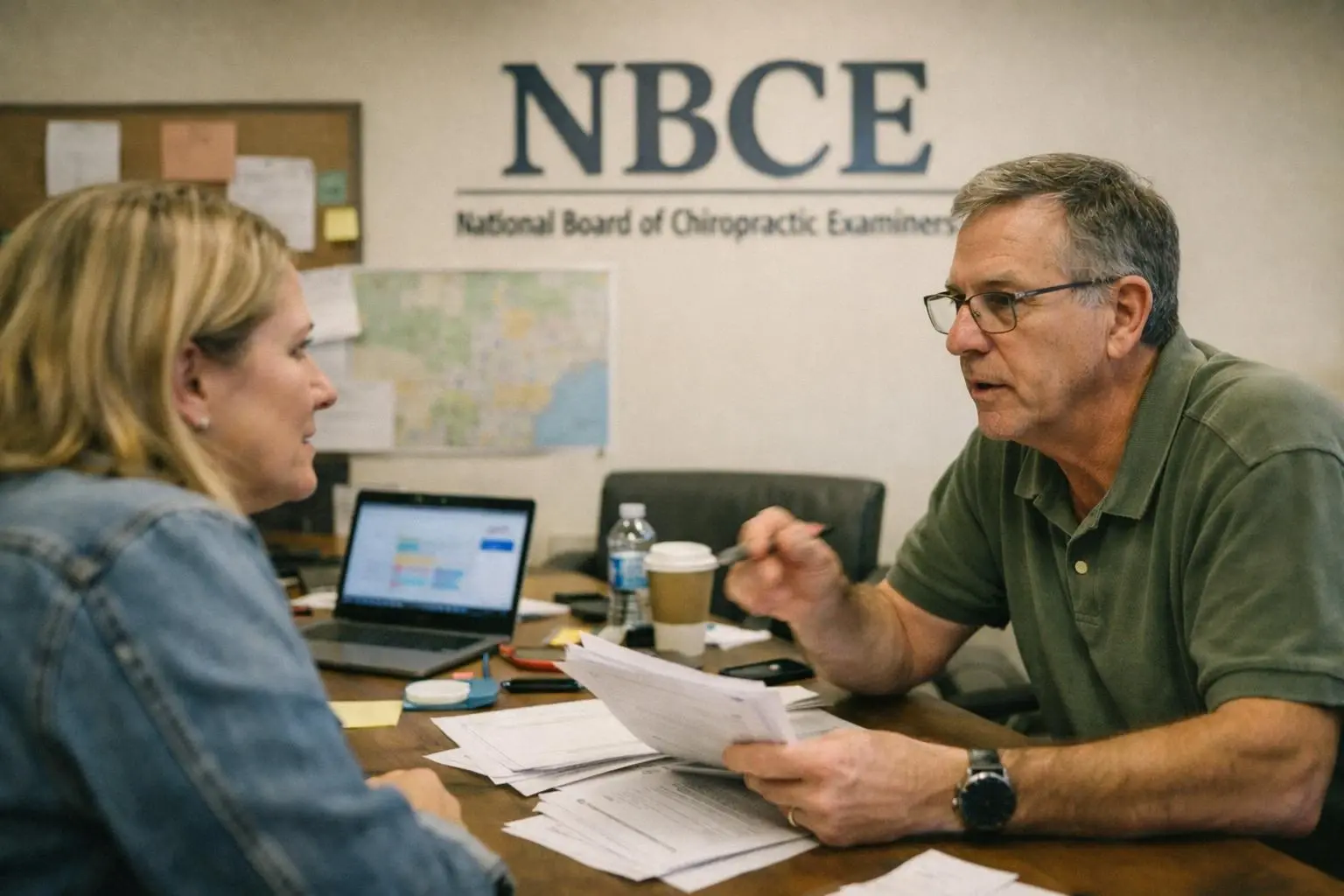
The National Board of Chiropractic Examiners (NBCE) is an independent organization responsible for developing and administering standardized exams for the chiropractic profession. These exams evaluate whether chiropractic students and graduates possess the necessary knowledge and skills to practice safely and effectively. NBCE exams are a critical step in the licensure process, as most states in the U.S. Require passing scores to obtain a chiropractic license.
Related glossary terms: Chiropractic License, Chiropractic School, Licensed Chiropractor.
NBCE was established in 1963 to create a uniform standard for chiropractic licensure across the country. Before its formation, each state had its own licensing exams, leading to inconsistencies in competency requirements. By offering a single set of exams recognized nationwide, NBCE helps ensure that all licensed chiropractors meet a baseline level of proficiency, regardless of where they practice or attend school.
How NBCE Exams Work?
NBCE exams are divided into several parts, each testing different areas of chiropractic knowledge and clinical skills. The most common exams include Part I (basic sciences), Part II (clinical sciences), Part III (case management and clinical competency). And Part IV (practical skills, including chiropractic techniques and diagnostic imaging). Some states also require additional exams, such as physiotherapy or acupuncture, depending on local regulations.
Exams are typically taken during or after chiropractic school, with Part I often completed in the second year of study and Part IV taken after graduation. The exams are administered in a multiple-choice format, except for Part IV, which includes hands-on assessments. Scores are reported on a scaled system. And passing thresholds are set by the NBCE board. Most states require a minimum passing score for licensure. Though specific requirements can vary.
Why NBCE Matters?
NBCE exams play a vital role in protecting public safety by ensuring that only qualified individuals can practice chiropractic care. By setting a standardized benchmark, NBCE helps maintain consistency in the quality of chiropractic education and practice across the U.S. Patients can trust that a licensed chiropractor has demonstrated competency in essential areas like anatomy, diagnosis. And treatment techniques.
For chiropractors, passing NBCE exams is often a legal requirement to obtain a license. Without licensure, chiropractors can't legally practice or bill for services. And some states require NBCE exam scores for license renewal or reciprocity, which allows chiropractors to practice in multiple states without retaking exams. This standardization simplifies the process for chiropractors who move or wish to expand their practice.
When NBCE Matters Most?
NBCE exams are most critical during the licensure process for aspiring chiropractors. Students typically take the exams at key points in their education, such as after completing basic sciences (Part I) or clinical training (Part II and III). Graduates must pass all required exams before applying for a state license, making NBCE a non-negotiable step for entering the profession.
A common issue is NBCE also matters for chiropractors seeking to practice in multiple states. Many states participate in reciprocity agreements, allowing chiropractors to transfer their NBCE scores instead of retaking exams. That means especially important for chiropractors in border regions, like Savannah, GA, where they may serve patients from neighboring states. And some states require NBCE scores for license renewal or additional certifications, such as physiotherapy or acupuncture endorsements.