Understanding Nerve Compression
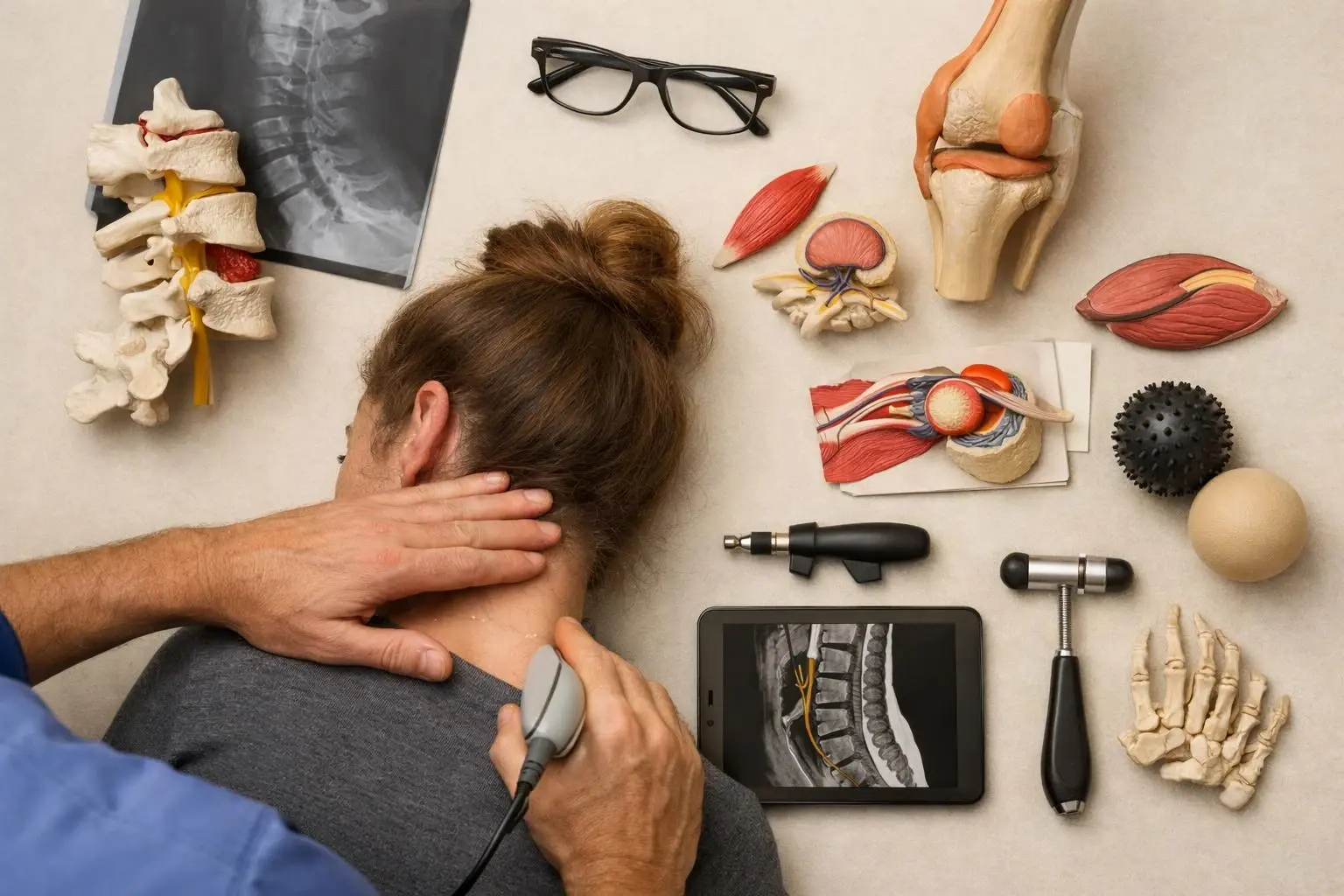
Nerve compression happens when too much pressure hits a nerve. This pressure comes from nearby tissues. These tissues can be bones, muscles, tendons. Or cartilage.
The pressure stops the nerve from working right. It can't send or get signals well. This causes pain, tingling. Or weakness. Nerves can handle some pressure. But too much can hurt them for good.
The body has many nerves. They send signals from the brain to the body. When a nerve is squeezed, signals get slow or stop. This causes pain or makes a body part work poorly.
A squeezed nerve in the back can cause sciatica. Sciatica is pain that goes down the leg.
How Nerve Compression Works?
Nerve compression often starts slow. But it can also happen fast from an injury. Nearby parts press on the nerve. These parts can be a slipped disc, swollen tendon. Or crooked bone.
Over time, the nerve gets sore. It swells up. This makes it work even worse. The body swells too. That puts more pressure on the nerve.
Doctors check your body to find nerve compression. They ask about your symptoms. They may use tests like X-rays or MRI scans.
These tests help find where the nerve is squeezed. They also show how bad it is. This helps rule out other problems.
An MRI can show a slipped disc. That disc may press on a nerve. Nerve tests check how well signals move.
Why Nerve Compression Matters?

Nerve compression matters a lot. It can hurt your daily life and health. If not treated, it can cause lasting pain.
It can also harm the nerve for good. You may lose feeling or strength. Carpal tunnel is one kind. It happens in the wrist.
If not treated, it can weaken your hand. Getting help early stops this. It can make symptoms go away. It can also keep problems from getting worse.
Nerve compression can also hurt your mind. Long pain and not moving well can cause stress. It can make you feel sad or worried.
Treating it early helps your body and mind. Many people feel better with simple treatments. These can be chiropractic care or physical therapy.
Changing how you live can also help. It can take pressure off the nerve.
When Nerve Compression Matters Most?
Nerve compression is bad when it stops daily tasks. It can also hurt your job. Someone who types a lot may get carpal tunnel.
This makes typing hurt. Athletes and workers who do the same moves can get it too. Their nerves get strained.
Spotting signs early helps a lot. Getting help keeps it from getting worse.
Some health problems raise the risk. These are arthritis, diabetes. Or being overweight. They can cause swelling or changes that squeeze nerves.
Pregnancy also raises the risk. Hormones and weight gain cause swelling. This can squeeze nerves in wrists or back.
Knowing risks helps you stay safe. Keep a healthy weight. Sit and stand straight. Use tools that help at work.