
What Is an Intervertebral Disc?
An intervertebral disc is a flexible cushion between adjacent spinal bones called vertebrae. Each disc has a firm outer ring and a softer inner center. The discs help the spine bear loads, move through daily activities, and reduce direct contact between vertebrae. Changes in disc structure can contribute to back or neck symptoms.
Quick Facts About Intervertebral Disc
Category
Spinal structure
Used for
Cushioning and spinal movement
Common confusion
Bulging disc versus herniated disc
Also called
Spinal Disc, Intervertebral disk
Often discussed with
Herniated Disc Treatment, Spinal Decompression Therapy
Key Takeaways About Intervertebral Disc
- Each disc has a firm outer ring and softer inner center.
- Disc changes may affect nearby spinal nerves.
- A bulging disc and herniated disc are not identical terms.
How Intervertebral Disc Works
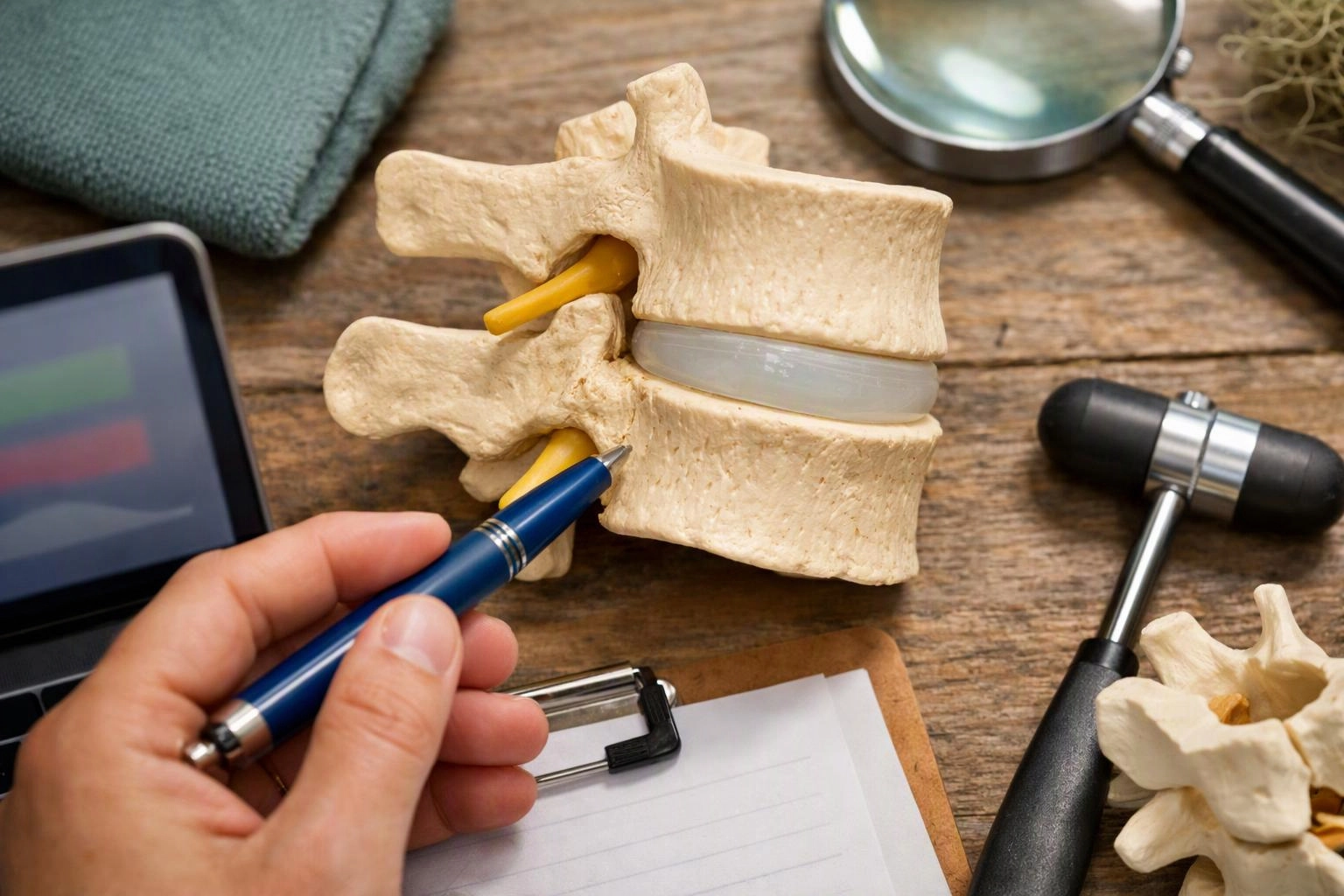
Intervertebral disc tissue sits between neighboring vertebrae and helps distribute pressure during standing, bending, and walking. The outer ring provides structure, while the inner center helps the disc respond to compression. Healthy disc function depends on the surrounding bones, joints, muscles, and connective tissues working together.
Related glossary terms: Bulging Disc, Lumbar Spine, Nerve Root.
A disc may change shape when its outer ring weakens or develops a tear. A bulging disc extends beyond its usual boundary without necessarily breaking the outer ring. A herniated disc involves inner disc material pushing through a damaged area of the outer ring. Clinicians consider symptoms, movement findings, and imaging when assessing how disc changes relate to a person’s condition.

From the Arrowhead Clinic Chiropractor Savannah team
When we evaluate a suspected disc problem, we review movement, symptom patterns, and relevant examination findings together. Our team considers whether disc changes may relate to nearby nerve irritation or altered spinal motion before discussing care within our Herniated Disc Treatment service.
Intervertebral Disc in Practice: A Real-World Example
A person with lower back pain may have an intervertebral disc change that affects movement or irritates a nearby nerve. During a Herniated Disc Treatment visit, the clinical assessment helps distinguish disc-related findings from muscle or joint sources.
Related Terms
Bulging Disc
A bulging disc is an intervertebral disc that extends beyond its usual boundary as the outer…
Lumbar Spine
The lumbar spine is the lower section of the spinal column, located between the thoracic spine…
Nerve Root
A nerve root is the beginning portion of a spinal nerve as it leaves the spinal…
Spinal Stenosis
Spinal Stenosis is a narrowing of the spaces within the spine that can reduce room for…
Arrowhead Clinic Chiropractor Savannah
Have Questions About Intervertebral Disc?
Contact Arrowhead Clinic Chiropractor Savannah for practical guidance on Intervertebral Disc and related chiropractor work in Savannah.