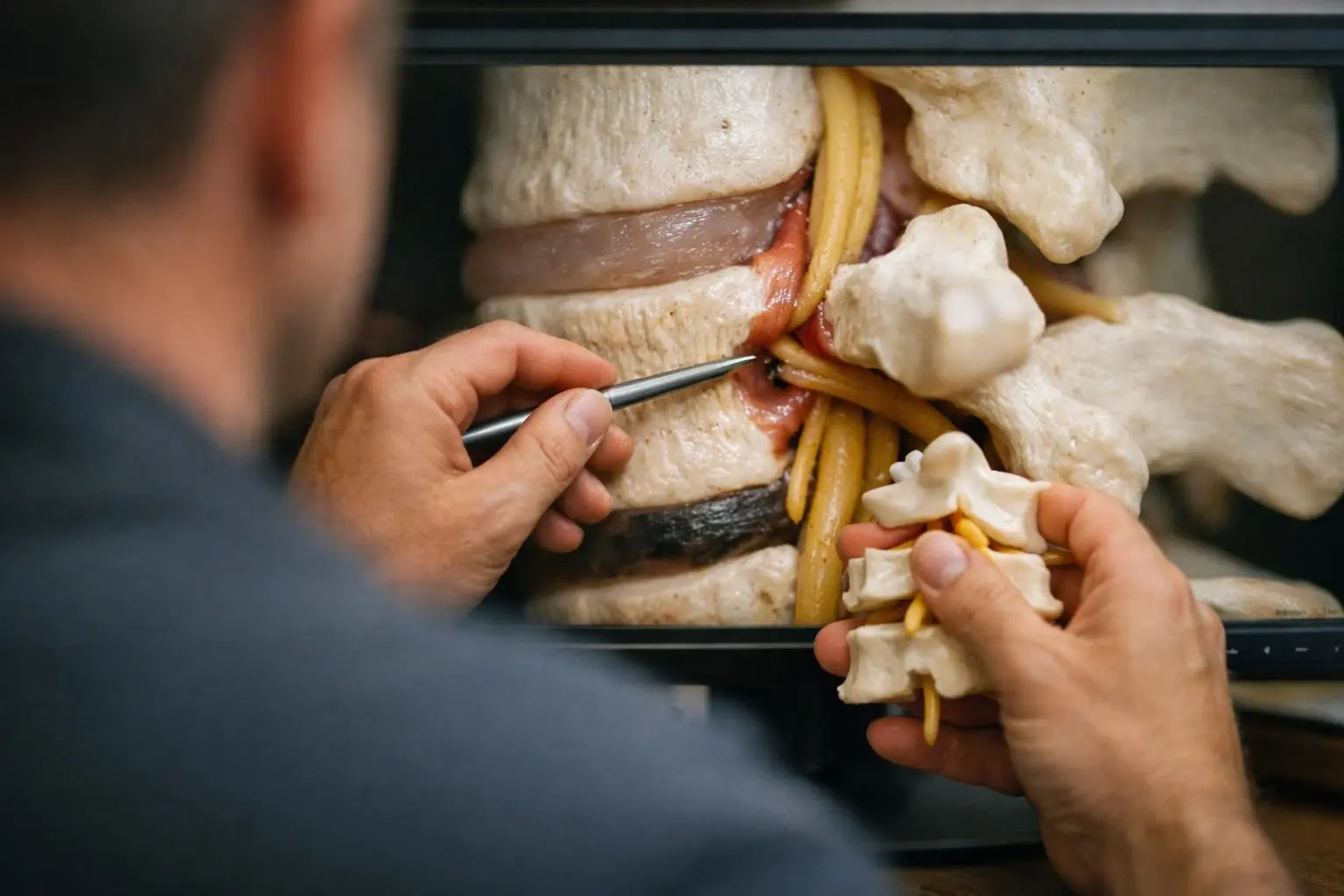
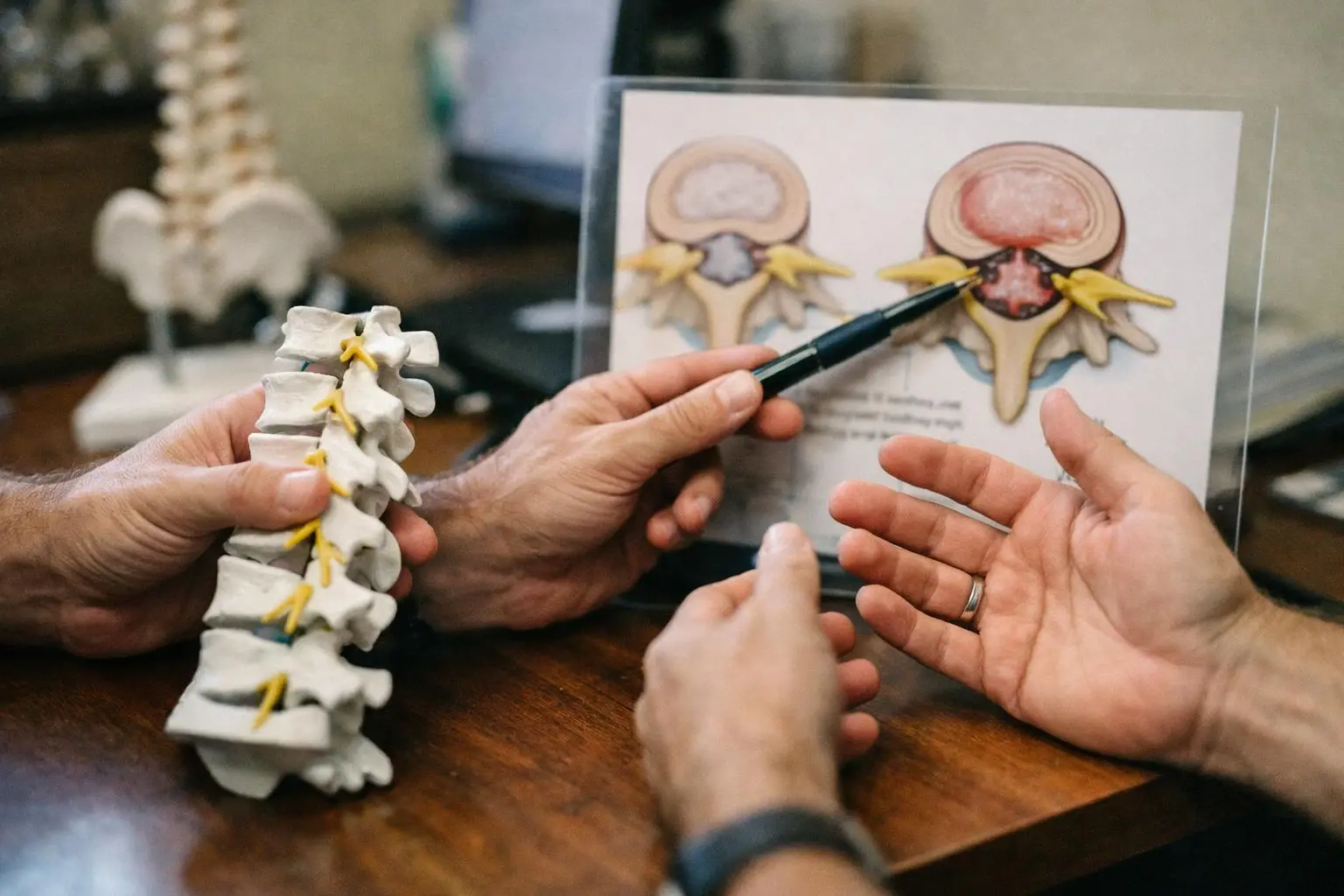
Spinal Stenosis is a narrowing of the spaces within the spine, which can put pressure on the nerves that travel through it. Spinal Stenosis most commonly occurs in the lower back (lumbar stenosis) and the neck (cervical stenosis) and often develops due to aging, arthritis. Or wear-and-tear changes in the spine.
Category
Spinal condition
Used for
Explaining nerve-related back or neck pain
Common confusion
Often mistaken for simple muscle strain or herniated disc
Also called
Spinal narrowing, Cervical stenosis
Often discussed with
Chiropractic Consultation and Diagnosis

Spinal Stenosis is a medical problem. The spaces inside the spine get too small. This can squeeze the spinal cord or nerves.
Related glossary terms: Back Pain, Nerve Compression, Disc Herniation.
That squeeze causes pain, numbness. Or weakness. The spine runs from your neck to your lower back. It protects the spinal cord.
The spinal cord sends signals to your body. When spaces shrink, signals get interrupted. This causes discomfort or trouble moving.
Most people get Spinal Stenosis as they age. Bones, discs. And ligaments wear down over time. They can thicken or grow bone spurs.
These changes take up more room. That leaves less space for nerves. Aging is the most common cause.
Some people are born with a narrow spine. They may feel symptoms earlier. Other causes include arthritis or injuries.
Herniated discs or tumors can also cause it. A herniated disc is when a disc slips out of place.
Think of the spine as a tunnel. Nerves run through this tunnel. Normally, there’s enough room for nerves.
With Spinal Stenosis, the tunnel gets smaller. It presses on the nerves. This can cause pain, tingling. Or weakness.
Symptoms depend on where the narrowing happens. In the neck, it can cause numbness. Arms, hands. Or shoulders may feel weak.
Some people have trouble walking. In the lower back, legs may hurt when standing. Sitting or bending forward often helps.
Doctors use tests to see the narrowing. X-rays, MRIs. Or CT scans show the problem. These tests confirm the diagnosis.

Spinal Stenosis can affect daily life. Pain or weakness makes walking hard. Standing or sitting for long hurts.
Simple tasks become difficult. Carrying groceries or climbing stairs may be tough. Typing can be hard too.
Severe cases can cause nerve damage. Some lose bladder or bowel control. Others struggle with balance.
Early treatment helps manage symptoms. It can stop the problem from getting worse.
Chronic pain affects emotions too. It can cause frustration or anxiety. Depression may set in if activities are limited.
Understanding the condition helps. Treatment options can improve life. Many find relief without surgery.
Chiropractic care or therapy can help. Medicine may ease pain too. Surgery is for severe cases only.
Spinal Stenosis matters when symptoms disrupt life. Walking to the mailbox may cause leg pain. Standing in line can hurt.
Sudden weakness needs quick help. Loss of coordination is serious. Trouble with bladder or bowels is an emergency.
This is called cauda equina syndrome. See a doctor right away.
Treatment depends on severity. Mild cases need small changes. Better posture or gentle exercise can help.
Severe cases may need therapy. Chiropractic care can adjust the spine. Surgery is sometimes needed.
Early help keeps you mobile. It helps older adults stay independent.
In Savannah, GA, humidity worsens symptoms. Heat can make joints and muscles ache more. Spinal Stenosis may feel worse in summer.
Local festivals or outdoor activities can flare symptoms. Chiropractors see more patients then. Standing or walking too long causes problems.
Disc Herniation happens when a spinal disc bulges or ruptures, pressing on nearby nerves. Spinal Stenosis involves narrowing of the spinal canal itself, often due to bone or tissue changes.
Sciatica is pain caused by irritation of the sciatic nerve, often from a herniated disc. Spinal Stenosis can cause sciatica-like symptoms but involves narrowing of the spinal spaces instead of a single nerve being pinched.
Spinal Stenosis often develops slowly. So patients may not notice symptoms until the narrowing becomes significant. Regular movement and posture awareness can help delay progression, especially in early stages.
A 65-year-old woman in Savannah notices her legs feel heavy and tingly after walking a few blocks. She sits down on a bench and feels relief within minutes. Over time, the distance she can walk without pain gets shorter. Her doctor confirms Spinal Stenosis in her lower back and recommends chiropractic care to help manage her symptoms.
Back Pain is discomfort or soreness in the upper, middle. Or lower back, often caused by muscle strain, poor posture, injury. Or spinal issues. Back Pain can range from mild to severe and may be short-term or chronic. It affects daily activities like sitting, standing. Or lifting and is one of the most common reasons people seek medical or chiropractic care.
Nerve Compression is a condition where surrounding tissues, such as bones, cartilage, muscles. Or tendons, press against a nerve. This pressure disrupts the nerve’s normal function, causing pain, tingling, numbness. Or weakness in the affected area. Common sites include the spine, wrists. And elbows, often resulting from injury, repetitive motion.
Disc Herniation is a spinal condition where the soft, gel-like center of a spinal disc pushes through a tear in the disc’s tough outer layer. This can irritate nearby nerves, causing pain, numbness. Or weakness in the back, neck, arms. Or legs. Disc herniation often occurs in the lower back or neck and is commonly linked to aging, injury.
Spinal Adjustment is a precise manual procedure performed by a licensed chiropractor to restore proper alignment and mobility to the spine. Using controlled force, the chiropractor applies a quick, gentle thrust to specific vertebrae, often producing a popping sound as joints release gas. This process aims to reduce pain, improve function.
Arrowhead Clinic Chiropractor
Contact Arrowhead Clinic Chiropractor for practical guidance on Spinal Stenosis and related chiropractor work in Savannah.