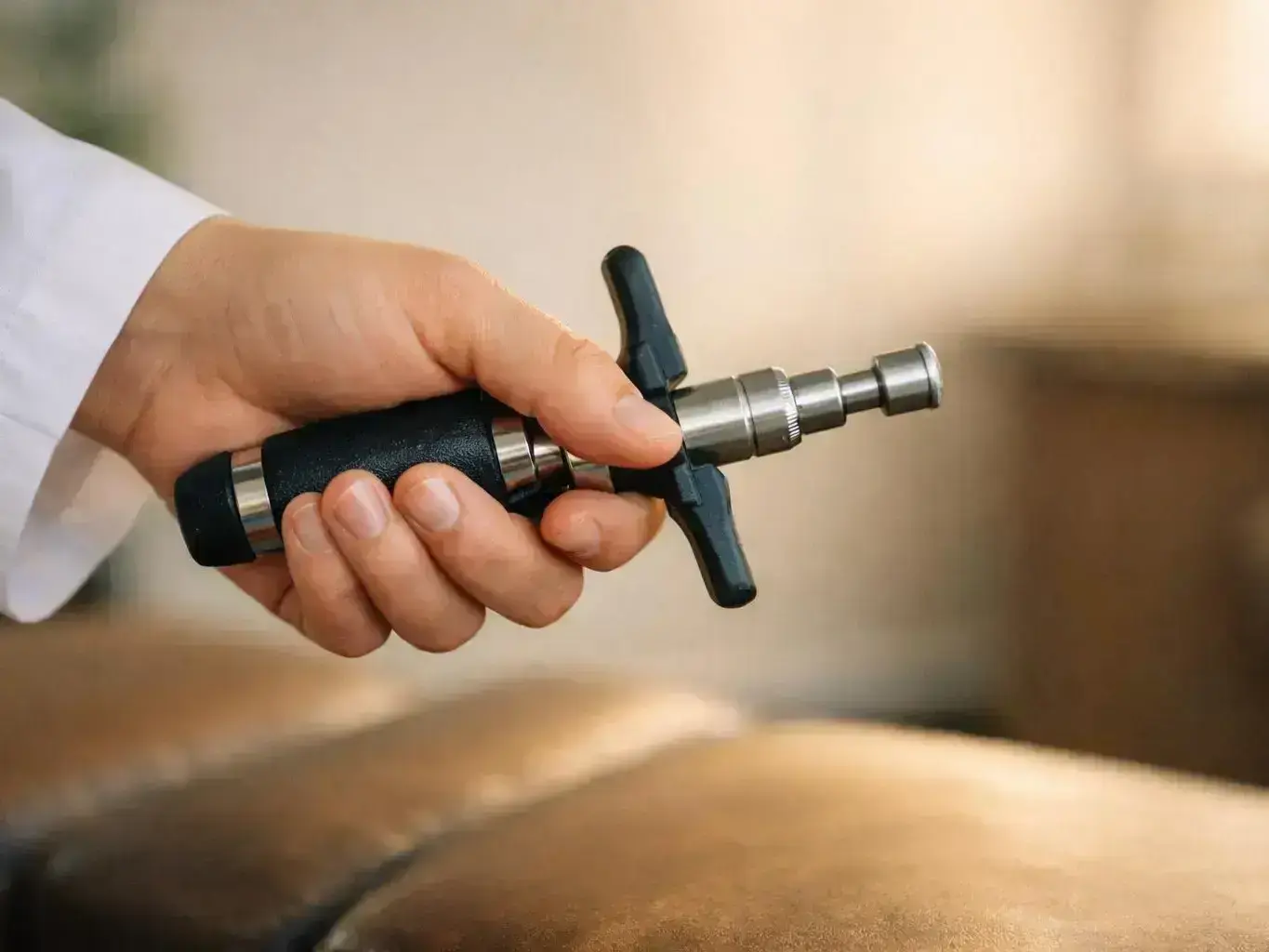
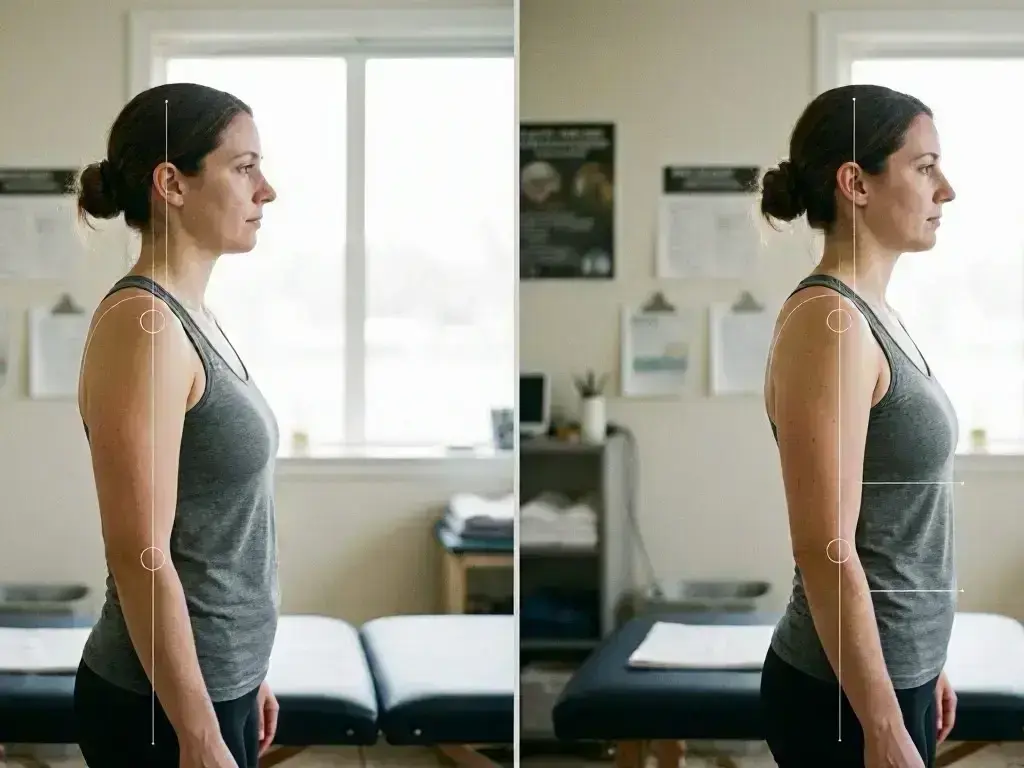
Spinal Decompression is a non-surgical treatment method designed to relieve pressure on the spine and spinal nerves. It involves gently stretching the spine using a motorized table or similar device to create negative pressure within spinal discs, promoting the retraction of herniated or bulging discs and improving nutrient flow to affected areas.
Category
Non-surgical spinal therapy
Used for
Herniated discs, sciatica, spinal stenosis, nerve compression
Common confusion
Often mistaken for spinal traction. But uses precise computer-controlled forces
Also called
Decompression Therapy, Non-Surgical Spinal Decompression
Often discussed with
Chiropractic Consultation and Diagnosis, Work Injury Treatment

Spinal Decompression helps with back and neck pain. It treats problems like herniated discs (bulging discs), sciatica (nerve pain). And spinal stenosis (narrow spine).
Related glossary terms: Disc Herniation, Chiropractic Adjustment, Flexion-Distraction.
It is not surgery. It uses a machine to stretch your spine gently. This takes pressure off nerves and discs.
The stretch makes a vacuum. This can pull herniated discs back in. Then pain goes down and you can move better.
A doctor or therapist does this in a clinic. You lie on a special table. Straps keep you safe.
The machine pulls your spine slowly. Each pull lasts a short time. Then it lets go.
Each visit takes 20 to 45 minutes. You may need many visits over weeks. Many people feel less pain after treatment.
Spinal Decompression pulls your spine with care. A computer controls the pull. It goes back and forth.
This makes a vacuum inside your discs. The vacuum pulls in water, oxygen. And good stuff. This helps discs heal.
Over time, bulging discs may pull back. This takes pressure off nerves. Then pain goes away.
The pull is set just for you. It depends on your weight and pain. The angle changes too.
Someone with lower back pain gets one kind of pull. Someone with neck pain gets another. The goal is to help without hurting.
You should feel a gentle pull. You should not feel pain.
Other treatments can help too. You might get chiropractic care (spine adjustments). Or heat and ice.
These help muscles relax. They also help blood flow. This supports your spine.
Most people can do this safely. But some can't. People with weak bones or cancer should not try it.

Spinal Decompression is not surgery. It helps people with bad back or neck pain. They don't have to take medicine or live with pain.
Some people have discs that bulge. Others have sciatica (nerve pain). They may not want surgery. This gives them another choice.
Surgery has risks. It also takes time to heal. This treatment has fewer risks. You can go back to daily life faster.
If nerves are squished, you may feel pain. You may also feel numb or weak. This treatment takes pressure off nerves.
Then you can move better. You can do things without pain. You don't need drugs to feel better.
Drugs can cause other problems. This treatment does not.
Some people try rest, therapy. Or medicine. Nothing helps. Spinal Decompression may work for them.
It helps with herniated discs (bulging discs). It also helps with worn-out discs. And narrow spines.
If pain shoots down arms or legs, this may help. It can stop tingling too. Weak muscles may get stronger.
Some people can't have surgery. They may be too old. Or have other health problems.
This treatment may still help them. But talk to a doctor first. Some problems make it unsafe.
People with bad arthritis or infections should not try it. Pregnant women should not either.
In Savannah, GA, many people work hard. Some play sports. Others get hurt in car accidents.
Spinal Decompression helps them heal. Chiropractors (spine doctors) use it often. It is part of a full plan.
It helps with work injuries and whiplash. It also helps with pain from doing the same thing over and over.
Spinal Traction is a manual or mechanical stretching of the spine, often less precise than Spinal Decompression, which uses computer-controlled forces to target specific areas.
Chiropractic Adjustment involves quick, manual manipulations to improve joint function. While Spinal Decompression focuses on gently stretching the spine to relieve disc pressure.
Flexion-Distraction is a hands-on chiropractic method that uses a specialized table to flex and distract the spine. While Spinal Decompression uses motorized traction.
Spinal Decompression is most effective when tailored to the patient's specific spinal condition and combined with complementary therapies like core strengthening exercises. Always confirm the provider uses evidence-based protocols and avoids overpromising results.
A 45-year-old construction worker in Savannah, GA, developed lower back pain and sciatica after lifting heavy materials. His MRI revealed a herniated disc pressing on a nerve. After six weeks of Spinal Decompression therapy, combined with chiropractic adjustments and physical therapy, his pain decreased significantly, allowing him to return to work without surgery.
Disc Herniation is a spinal condition where the soft, gel-like center of a spinal disc pushes through a tear in the disc’s tough outer layer. This can irritate nearby nerves, causing pain, numbness. Or weakness in the back, neck, arms. Or legs. Disc herniation often occurs in the lower back or neck and is commonly linked to aging, injury.
Chiropractic Adjustment is a hands-on procedure chiropractors use to apply controlled force to a specific joint in the spine or other body parts. The goal is to improve joint motion, reduce pain. And support the body’s natural ability to heal. Adjustments are typically quick and may produce a popping sound caused by gas releasing from the joint.
Flexion-Distraction is a gentle, non-surgical chiropractic technique designed to relieve spinal pain and improve mobility. It uses a specialized table to stretch and decompress the spine, reducing pressure on discs, nerves. And joints. This method is commonly used for conditions like disc herniation, sciatica. And chronic back pain.
Nerve Compression is a condition where surrounding tissues, such as bones, cartilage, muscles. Or tendons, press against a nerve. This pressure disrupts the nerve’s normal function, causing pain, tingling, numbness. Or weakness in the affected area. Common sites include the spine, wrists. And elbows, often resulting from injury, repetitive motion.
Arrowhead Clinic Chiropractor
Contact Arrowhead Clinic Chiropractor for practical guidance on Spinal Decompression and related chiropractor work in Savannah.