Glossary

What is Myofascial Release?

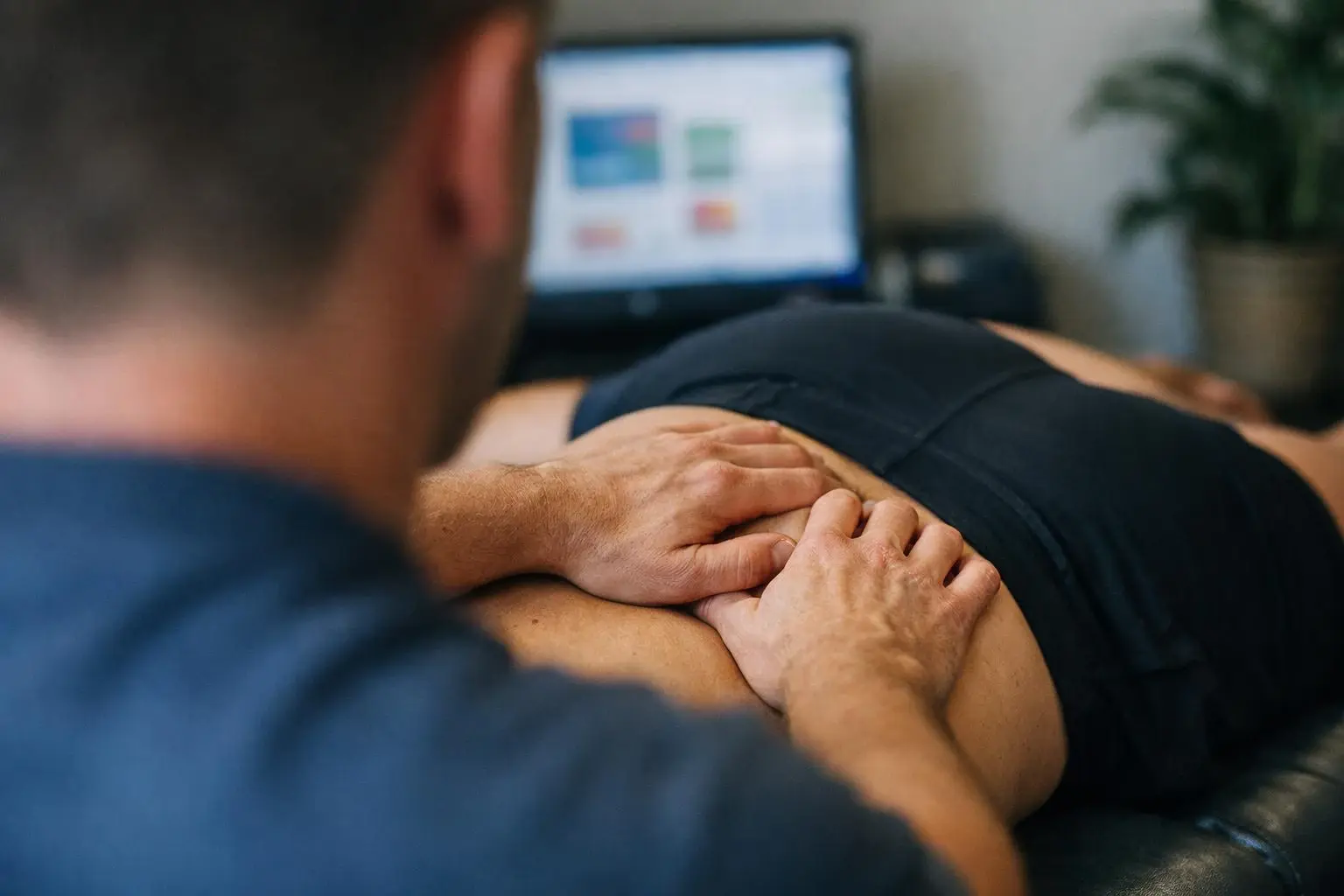
Myofascial Release is a hands-on therapy that targets tightness in the fascia, the thin layer of tissue surrounding muscles, bones. And organs. It uses gentle, sustained pressure to stretch and relax the fascia, improving mobility and reducing pain caused by stiffness, injury. Or overuse. This technique helps restore natural movement and ease discomfort in muscles and joints.

Reviewed by Dr. Harry W. Brown, D.C.Sources reviewed: National Center for Complementary and Integrative Health (NCCIH), American Physical Therapy Association (APTA)

Quick Facts About Myofascial Release

Category

Soft tissue therapy

Used for

Muscle tightness, pain. And restricted movement

Common confusion

Often mistaken for deep tissue massage. But focuses on fascia, not just muscles

Also called

MFR, Fascial Release

Often discussed with

Chiropractic Consultation and Diagnosis, Car Accident Injury Rehabilitation

Key Takeaways About Myofascial Release

Understanding Myofascial Release

Myofascial Release in Chiropractor: Myofascial Release is a hands-on therapy that targets tightness in the fascia—visual g...

Myofascial Release is a soft tissue therapy. It helps with tightness in the fascia. Fascia is a thin tissue. It looks like a web.

Related glossary terms: Soft Tissue Therapy, Chiropractic Adjustment, Graston Technique.

Fascia wraps around muscles and bones. It also wraps around nerves and organs. When fascia gets tight, it can hurt.

Tight fascia can cause pain. It can make you stiff. You may not move as well. This happens after injuries or bad posture.

Myofascial Release is different from massage. Massage works on muscles. This therapy works on fascia.

It helps your body move naturally. It can ease pain too.

How Myofascial Release Works?

People use this therapy for chronic pain. It helps with muscle tension. It also helps after injuries.

It can help with back pain. It can help with neck stiffness. It can even help with headaches.

The therapy is gentle. It does not use sudden force. Many people can use it safely.

It works on sensitive areas. It helps fascia relax. Then your body moves better.

Therapists press gently on tight fascia. They hold the pressure for minutes. This helps fascia relax.

The pressure is light but steady. It lets fascia stretch. This breaks up sticky spots (adhesions).

Better blood flow helps healing. It also reduces pain. This happens over time.

Therapists can use their hands. They can also use tools. Foam rollers work too.

Some tools help apply pressure. The goal is the same. It helps fascia stay balanced.

Muscles and joints move better. People feel more flexible. Some feel relief right away.

Others need a few visits. Results build over time.

Myofascial Release is not the same for everyone. Each session fits the person. It works on the tightest spots.

Someone with back pain may work on hips. A stiff neck may need shoulder work. The therapist guides movements.

This helps release tension. It happens during the session.

Why Myofascial Release Matters?

How Myofascial Release applies to Chiropractor services in Savannah, United States—practical illustration

Myofascial Release helps with many problems. Tight fascia can cause pain. It can make you stiff.

Healthy fascia moves smoothly. It lets muscles and joints work right. But tight fascia pulls on bones.

This can hurt. It can change your posture. Over time, it makes moving hard.

Daily tasks get harder. Work feels tough. Exercise is not fun.

This therapy helps with long-term pain. Other treatments may not work. This one fixes the root cause.

It helps fascia get healthy. It does not just hide pain. It works with other therapies too.

Chiropractic care can work better. Physical therapy may help more. The body moves easier.

Healing happens faster. Athletes use it to stay safe. It keeps fascia flexible.

When Myofascial Release Matters Most?

Myofascial Release helps with pain. It helps when you can't move well. Tight fascia causes these problems.

It helps after injuries. Sprains and strains heal better. It works after surgery too.

Scar tissue can form. It may limit how you move. This therapy helps with that.

It helps with long-term pain. Fibromyalgia feels better. Tension headaches ease up.

Repetitive strain hurts less. Daily life gets easier. People with bad posture feel relief.

Desk jobs cause tightness. Sitting too long hurts. This therapy helps neck and back.

Other treatments may not work. Medications only help for a while. Traditional massage may miss the problem.

Myofascial Release works deeper. It targets fascia directly. This helps more with pain.

Lower back pain may improve. It helps more than regular massage. It is gentle and safe.

It does not need surgery. You don't need strong drugs. It is a good choice for many.

In Savannah, GA, people stay active. They play sports. They work outside.

Jobs can be tough on the body. Myofascial Release helps. It keeps people moving well.

Therapists use it after car accidents. It helps after sports injuries. People return to daily tasks easier.

They feel less pain. They move better. This therapy helps a lot.

How to Evaluate Myofascial Release?

Related Concepts Compared

Myofascial Release vs. Deep Tissue Massage

Deep Tissue Massage focuses on relieving tension in muscles with firm pressure. While Myofascial Release targets the fascia surrounding muscles, bones. And organs with gentle, sustained stretching.

Myofascial Release vs. Chiropractic Adjustment

Chiropractic Adjustments involve quick, targeted movements to realign joints. While Myofascial Release uses slow, hands-on pressure to release tight fascia and improve tissue mobility.

Myofascial Release vs. Graston Technique

The Graston Technique uses specialized tools to break up scar tissue. While Myofascial Release relies on hands-on stretching and pressure to release fascia without tools.

Expert Note

Myofascial Release requires patience—fascia responds slowly to pressure. So quick or aggressive techniques may not yield lasting results. A skilled therapist will hold pressure for several minutes, allowing the tissue to relax and lengthen naturally.

Common Mistakes or Myths About Myofascial Release

  • Expecting immediate results—fascia releases slowly and may require multiple sessions.
  • Confusing Myofascial Release with deep tissue massage, which uses more force.
  • Skipping follow-up sessions, which can lead to tightness returning.
  • Assuming it will fix joint misalignments—it works on soft tissue, not bones.
  • Not communicating discomfort during the session, which can affect results.

Myofascial Release in Practice: A Real-World Example

After a car accident, a patient in Savannah experienced chronic neck stiffness and headaches. Traditional massage provided temporary relief. But the pain returned within days. A chiropractor trained in Myofascial Release identified tight fascia in the upper back and shoulders. After several sessions of gentle, sustained pressure, the patient’s range of motion improved. And the headaches decreased in frequency.

Sources & Further Reading on Myofascial Release

Related Services

Related Terms

Soft Tissue Therapy

Soft Tissue Therapy is a hands-on treatment that targets muscles, tendons, ligaments. And fascia to reduce pain, improve mobility. And promote healing. Soft Tissue Therapy uses techniques like massage, stretching. And pressure to break up scar tissue, release tension.

Chiropractic Adjustment

Chiropractic Adjustment is a hands-on procedure chiropractors use to apply controlled force to a specific joint in the spine or other body parts. The goal is to improve joint motion, reduce pain. And support the body’s natural ability to heal. Adjustments are typically quick and may produce a popping sound caused by gas releasing from the joint.

Graston Technique

Graston Technique is a form of instrument-assisted soft tissue mobilization used by healthcare providers to detect and treat muscle, tendon, ligament. And fascia restrictions. Graston Technique involves specially designed stainless-steel tools to break down scar tissue and fascial restrictions, improving range of motion and reducing pain for patients with soft tissue injuries.

Back Pain

Back Pain is discomfort or soreness in the upper, middle. Or lower back, often caused by muscle strain, poor posture, injury. Or spinal issues. Back Pain can range from mild to severe and may be short-term or chronic. It affects daily activities like sitting, standing. Or lifting and is one of the most common reasons people seek medical or chiropractic care.

Neck Pain

Neck Pain is discomfort, stiffness. Or sharp pain in the cervical spine region, which includes the seven vertebrae supporting the head and enabling movement. Neck Pain can arise from muscle strain, joint dysfunction, nerve compression, injury.

Arrowhead Clinic Chiropractor

Have Questions About Myofascial Release?

Contact Arrowhead Clinic Chiropractor for practical guidance on Myofascial Release and related chiropractor work in Savannah.

+1 912-378-1371